CNC Plate Punching with Drilling Machine — Nalagarh
One machine, two operations, no plate handling in between.
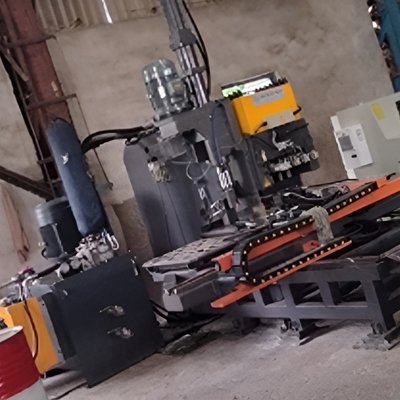
A fabricator running punched and drilled holes on the same plate normally does it in two setups: punch on one machine, move the plate, drill on another. Every move is a chance for the plate to shift, the reference point to change, and the two operations to stop lining up with each other. ACM's CNC Plate Punching with Drilling Machine does both on one bed, one clamping, one program — which is really the entire reason this machine category exists.
Punches up to 30mm thickness. Drills up to 50mm diameter. Worktable 2000 x 1500mm. Spindle speed adjustable up to 3000 RPM. Manufactured and supplied by ACM (Ansari CNC Machinery) in Nalagarh.
"Do I actually need punching and drilling on one machine, or is that overkill?"
Depends on what your plates look like. If your work is pure drilling — same hole type throughout — a dedicated drilling machine is the simpler, usually cheaper choice. But if your plates regularly need a mix of punched holes (fast, for standard round or shaped holes within thickness limits) and drilled holes (for larger diameters or where punching would deform the plate), doing both on separate machines means double the setup time and double the chance of misalignment between the two hole sets.
The combination machine earns its cost back specifically on mixed-hole-type plates — bracket plates with both bolt holes and larger structural openings, base plates with a punched pattern plus a few drilled mounting holes, that kind of job. If that's not your typical plate, a single-function machine will usually serve you better and cost less.
What it actually does, in order
- Plate loads onto the 2000 x 1500mm worktable and gets clamped once.
- The CNC program (loaded from your drawing) runs the punching station first for holes within the 30mm thickness punching capacity — this is the faster operation per hole, since punching doesn't need to bore through material the way drilling does.
- The same program then switches to the drilling head for holes needing the 50mm diameter drilling capacity, or for thicker sections and hole types punching can't handle cleanly.
- Spindle speed adjusts up to 3000 RPM depending on hole size and material — the machine handles this per the program, not manually per hole.
- Plate comes off once, fully finished — no second setup, no second reference point, no second clamping error to worry about.
Where this earns its keep
- Base plates and gusset plates with mixed hole requirements. A structural base plate that needs both a bolt-hole pattern and a couple of larger drilled openings for services or access is the textbook use case.
- PEB (Pre-Engineered Building) component fabrication. PEB plants often need standardized, repeatable plate patterns with both punched and drilled features across high volumes — programming once and re-running the file is where the real time saving shows up.
- General structural steel fabrication shops juggling variable job types — where buying two dedicated machines isn't justified by volume, but needing both operations regularly rules out a single-function machine.
- Bracket and connection plate production for steel structures, where punched holes handle standard bolt patterns and drilling handles the larger or non-standard openings on the same part.
Specification of CNC Plate Punching With Drilling Machine
| Punching capacity | Up to 30mm thickness |
| Drilling capacity | Up to 50mm diameter |
| Worktable size | 2000mm x 1500mm |
| Spindle speed | Adjustable, up to 3000 RPM |
| Warranty | 1 year |
| Configuration | Customizable to your plate size / hole pattern needs |
Punching vs. drilling on the same plate — why not just pick one?
Punching is fast and clean for holes within thickness limits, but it has a ceiling — push it past what the punch tooling and plate thickness can handle cleanly, and you get deformation or tearing at the hole edge instead of a clean cut.
Drilling handles larger diameters and thicker sections without that deformation risk, but it's slower per hole than punching, especially at 50mm diameter through structural-grade steel.
Most real plates in structural fabrication need both — a run of standard bolt holes that punching handles fast, plus a few larger or thicker-section holes that need drilling. Running both operations on separate machines means you're accepting double setup time to get a result this single machine produces in one clamping.
About the machine's build
ACM's punching-with-drilling machines are built around CNC-controlled dual operation — a punching station and a drilling head sharing the same worktable and control program, rather than being separate machines bolted together. The worktable is sized for structural-plate work (2000 x 1500mm), and spindle speed is adjustable up to 3000 RPM so drilling parameters can be tuned to hole size and plate material rather than running one fixed speed regardless of what's being drilled.
Configurations are customizable — if your typical plate size, hole pattern, or thickness range sits outside the standard spec, that's a configuration conversation with ACM's team rather than a hard limit.