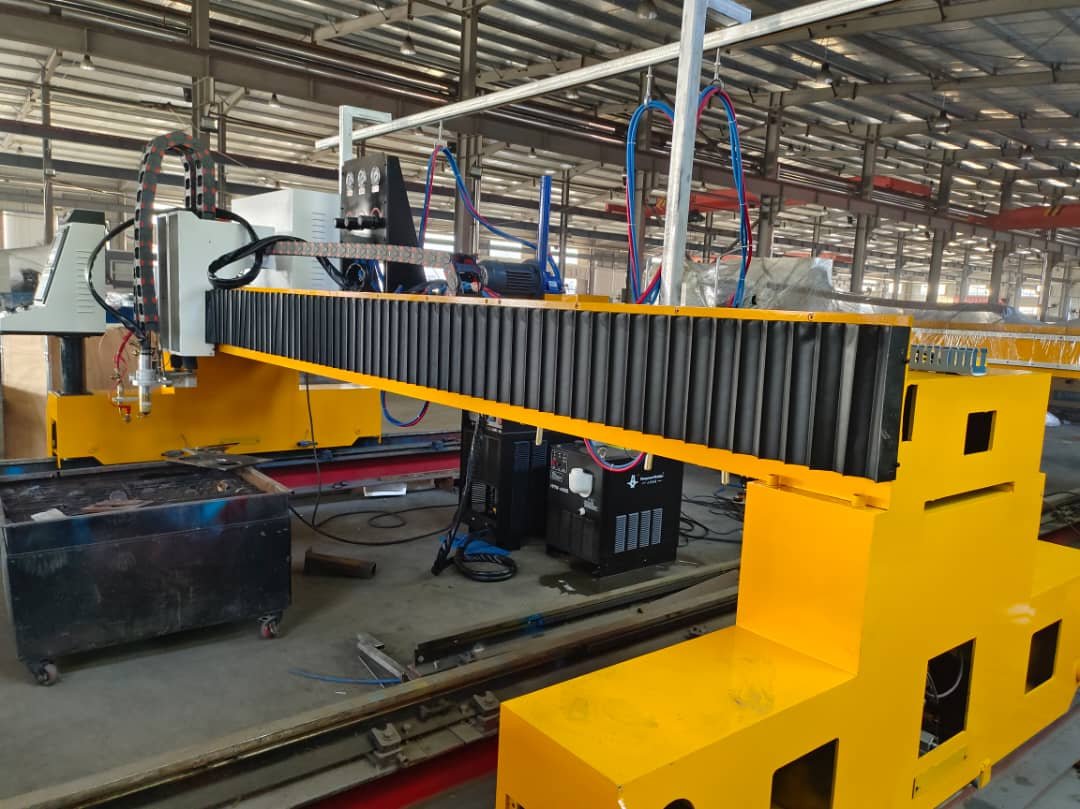
ACM's CNC Plasma & Oxy-Fuel Cutting Machine is a dual-process cutting system built for fabrication shops in and around West Bengal that need both speed and thickness range from one machine. Plasma handles thin-to-medium mild steel, stainless, and aluminium at high speed, while the oxy-fuel torch takes over on thick mild steel plate where plasma edge quality drops off. As a CNC Plasma & Oxy-Fuel Cutting Machine manufacturer in West Bengal, ACM builds the machine on a rigid gantry frame with CNC-driven torch positioning, so shops switch processes without swapping equipment or re-fixturing the plate.
What is a CNC Plasma & Oxy-Fuel Cutting Machine?
A CNC Plasma & Oxy-Fuel Cutting Machine is a computer-controlled plate cutting system that combines a plasma torch and an oxy-fuel torch on the same gantry, letting one machine cut thin sheet with plasma and thick mild steel plate with oxy-fuel, without moving the plate between two separate machines.
CNC Plasma & Oxy-Fuel Cutting Machine in West Bengal
A CNC Plasma & Oxy-Fuel Cutting Machine solves a problem that shows up on almost every fabrication floor sooner or later: plasma alone is fast and clean on thin-to-medium plate, but its cut quality and cost-per-cut both suffer once you're into thick mild steel. Oxy-fuel alone is the opposite — excellent on thick plate, too slow and rough-edged to bother with on anything thin. Running two separate machines to cover both cases eats floor space and doubles the CNC controllers, drive systems, and maintenance a shop has to manage.
ACM's CNC Plasma & Oxy-Fuel Cutting Machine puts both torches on one CNC-driven gantry so the same table, the same drive system, and the same programming interface handle both jobs. The operator (or the nesting software) decides which torch runs the job — plasma for the sheet-metal brackets, oxy-fuel for the structural plate — without reprogramming the machine from scratch or re-clamping the material on a second table.
This machine is built for structural steel fabricators, PEB (pre-engineered building) manufacturers, heavy equipment OEMs, and job-shop cutters around West Bengal and the broader NCR industrial belt who cut a mixed range of plate thickness through the week rather than one narrow band. The dual-process design exists specifically because most real cutting workloads aren't single-thickness — a shop cutting 6mm brackets on Monday and 40mm base plates on Thursday needs one machine that does both competently, not two machines each doing half the job well.
Why Choose ACM's CNC Plasma & Oxy-Fuel Cutting Machine
- Single Gantry, Dual Torch Head— Plasma and oxy-fuel torches are mounted on the same CNC-driven carriage, so the machine switches cutting process by torch selection in the control software — not by moving the plate to a different machine or re-zeroing the axes.
- CNC-Controlled Torch Height Control (THC)— Automatic torch height control keeps standoff distance consistent as the plate surface varies, which matters more on oxy-fuel where an inconsistent gap directly affects preheat time and cut squareness.
- Rigid Gantry Frame Construction— A box-section welded gantry resists the vibration that shows up on lighter frames during long oxy-fuel cuts on thick plate, where the torch is in contact with the workpiece heat zone for extended periods.
- Nesting-Software Compatible— The control accepts standard nesting file formats, so shops running true-shape or rectangular nesting software can send cut programs directly without manual re-drawing.
- Multiple Torch Stations for Batch Work—Where the job calls for repeat parts, an optional multi-torch plasma configuration cuts several identical parts per pass, cutting per-part cycle time on batch orders.
- Built and Supported Locally in West Bengal— As a West Bengal-based CNC Plasma & Oxy-Fuel Cutting Machine manufacturer, ACM handles commissioning, operator training, and after-sales service without the delays that come with sourcing from an out-of-state or imported supplier.
Benefits of Using CNC Plasma & Oxy-Fuel Cutting Machine
- One machine covers two cutting ranges — no need to buy, house, and maintain a separate oxy-fuel-only table just for the occasional thick-plate job.
- Lower floor-space requirement than running two standalone cutting tables side by side, which matters in West Bengal's typically tighter industrial shed layouts.
- Faster turnaround on mixed-thickness orders — a single job with both thin brackets and thick base plates can run on one machine instead of being split across two work centers.
- Lower per-part cost on thick plate — oxy-fuel consumables cost less than running plasma at the upper edge of its thickness range, where cut quality and consumable life both drop.
- Reduced re-fixturing time — the plate stays clamped on one table while the program switches torches, instead of being unloaded, moved, and re-zeroed on a second machine.
- Simplified operator training — one control interface and one machine to learn, instead of cross-training staff on two separate CNC systems.
- Consistent cut geometry across processes — because both torches share the same CNC axes and reference points, parts nested across both processes still line up to the same origin.
- Easier maintenance planning — one gantry, one drive system, and one CNC controller to service, rather than duplicate wear parts and service schedules across two machines.
Quality Assurance
Every machine is test-cut in both plasma and oxy-fuel modes before dispatch to confirm cut squareness and edge finish across the thickness range it's rated for. Axis calibration is verified against the table's full travel, not just a sample zone, so positioning accuracy holds consistent from one edge of the plate to the other.
Plasma vs. Oxy-Fuel — Which Process for Which Job
| Factor | Plasma | Oxy-Fuel |
|---|---|---|
| Best thickness range | Thin to medium MS, SS, aluminium | Thick mild steel |
| Cutting speed | Fast | Slower |
| Cut edge quality on thin plate | Clean, minimal dross | Not recommended (too rough, too slow) |
| Cut edge quality on thick plate | Drops off, more dross | Clean, consistent |
| Material types | MS, stainless steel, aluminium | Mild steel and low-alloy steel only |
| Running cost on thick plate | Higher (consumable wear rises with thickness) | Lower |
| Typical use | Sheet brackets, thin structural parts | Base plates, thick structural sections |
Why Buy From ACM
ACM manufactures and supplies CNC Plasma & Oxy-Fuel Cutting Machines from West Bengal, which means commissioning, operator training, and any post-installation service calls don't involve waiting on a distant or overseas supplier. As a manufacturer rather than a reseller, machine specifications — table size, torch configuration, THC setup — can be configured to the buyer's actual production mix instead of choosing from a fixed catalogue model.