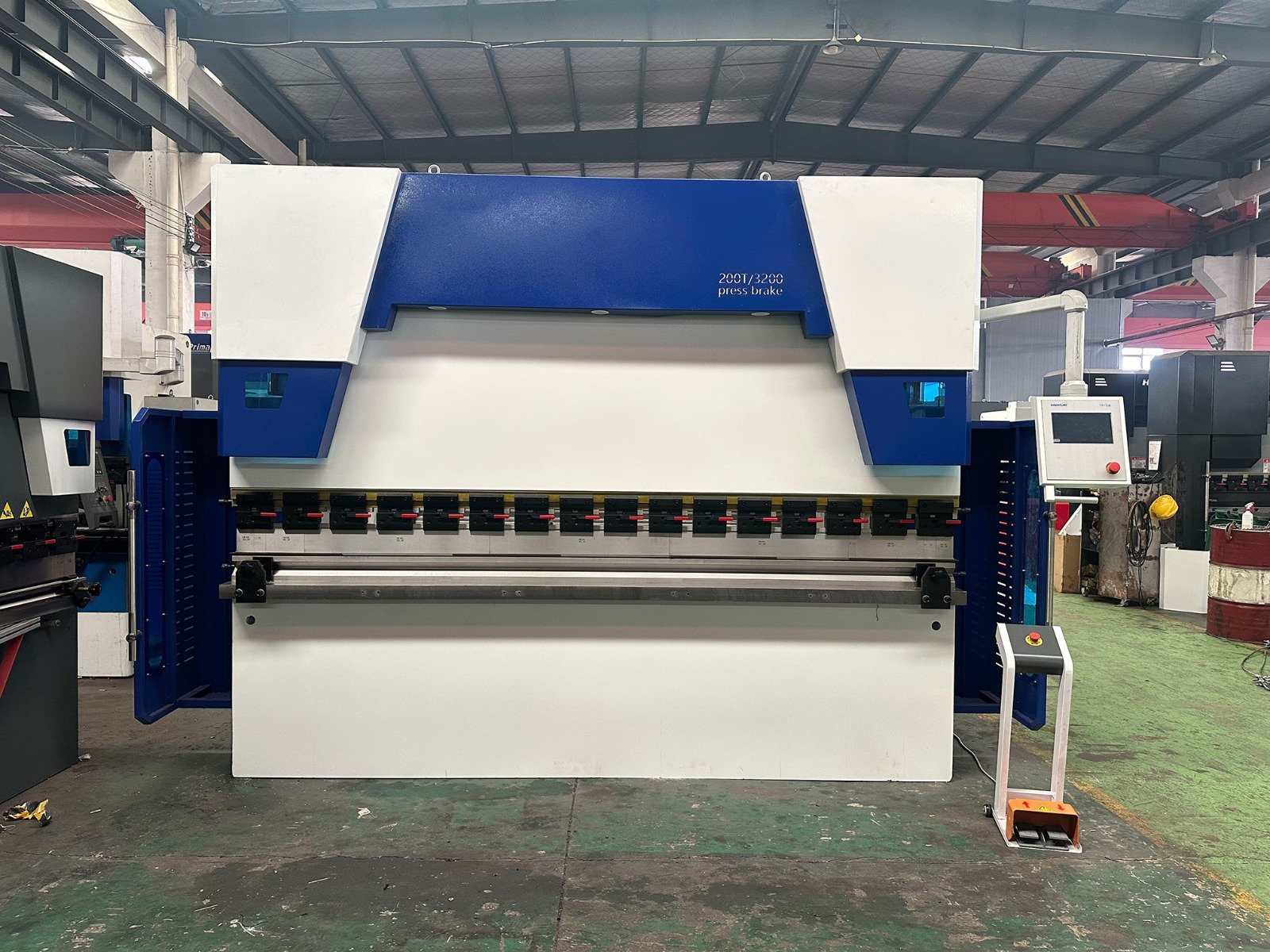
A CNC Bending Machine, commonly known as a press brake, bends flat metal sheet or plate into a precise angle or profile using a punch and die under hydraulic or mechanical force, with a CNC-controlled backgauge positioning the material for each bend. It's a core machine in any sheet metal or plate fabrication shop — used for everything from simple L-brackets to complex multi-bend enclosures. ACM supplies CNC bending machines to fabricators in Gujarat and across North India, sized for plate and sheet work up to 12mm thickness and 6000mm bend length.
What is a CNC Bending Machine? A CNC Bending Machine (press brake) bends flat metal sheet or plate to a specified angle using a punch and die, with a CNC-controlled backgauge that positions the material precisely for each bend. It's used across sheet metal and structural steel fabrication wherever flat stock needs to become an angled or profiled part.
How do I choose the right CNC Bending Machine? Match the machine's tonnage to your thickest material and longest bend length — not your average job — and confirm the backgauge stroke and max bending radius suit the part geometries you actually produce, not just a catalog spec sheet.
CNC Bending Machine Supplier in Gujarat
Every bend in a piece of sheet metal or plate has to land at the right angle, in the right place, every single time — because a bend that's off by even a couple of degrees can throw off how a part fits into everything downstream of it. A CNC Bending Machine is built to hold that accuracy across a full production run, not just the first piece.
The way it works is straightforward in principle: a punch (the top tool) presses the material down into a die (the bottom tool), forcing it to bend along the die's profile. What makes it a CNC machine is the backgauge — a positioning system that moves the material to the exact spot needed for each bend, controlled by a program rather than a hand-set stop. That's what turns "a press that bends metal" into a machine that can repeat a five-bend enclosure part identically, a hundred times over.
ACM supplies CNC bending machines to fabricators in Gujarat and across North India working in structural steel, PEB components, and general sheet metal fabrication, where consistent bend angles matter as much as raw bending force.
Specifications
| Parameter | Value |
|---|---|
| Machine type | Press brake |
| Capacity | 500 Ton |
| Bending capacity | 300 Ton |
| Max bending length | 6000 mm |
| Max sheet thickness | 12 mm |
| Max bending radius | 250 mm |
| Backgauge stroke | 600 mm |
| Axis control | 3-axis |
| Automation grade | Fully-automatic |
| Power source | Hydraulic |
| Frequency | 50 Hz |
| Bending material |
Plate (mild steel) |
How to Size a CNC Bending Machine to Your Work
Three numbers decide whether a machine actually fits your job mix, and none of them are "biggest tonnage available":
- Tonnage vs. material thickness and bend length. Bending force needed goes up with material thickness and the length of the bend line together — a short bend in thick plate can need more tonnage than a long bend in thin sheet. Check the machine's tonnage rating against your thickest material at your longest typical bend length, not against a single number in isolation.
- Bend length vs. your widest part. A 6000mm bending length covers most structural and sheet metal work, but if you're bidding on jobs with wider panels, that number becomes the hard ceiling on what you can take on.
- Backgauge stroke vs. your part depth. The backgauge stroke determines how far back the material can be positioned for a bend — relevant for parts with deep flanges or multiple bends measured from one edge.
CNC Bending Machine vs. CNC Angle Bending Machine
A related but distinct machine — worth clarifying since buyers sometimes search for one meaning the other:
| Factor | CNC Bending Machine (Press Brake) | CNC Angle Bending Machine |
|---|---|---|
| What it bends | Flat sheet and plate | Angle sections and profiled steel |
| Typical use | Enclosures, brackets, structural plate parts | Structural angle framing, tower and PEB components |
| Tooling | Punch and die | Roll or press-based angle tooling |
| Common capacity range | Up to 500 Ton (this model) | Up to 450 Ton (ACM's angle bending model) |
If your work is primarily flat plate and sheet, the standard CNC Bending Machine is the right fit. If you're bending angle sections for structural framing, ACM's CNC Angle Bending Machine is the more direct match — worth checking before ordering the wrong one.
Applications
- Structural steel and PEB component fabrication. Plate parts like base plates, gusset plates, and connection brackets get bent to spec here before moving to welding or assembly.
- General sheet metal fabrication. Enclosures, panels, and equipment housings rely on consistent bend angles across every part in a batch, which is where CNC backgauge control earns its keep over manual bending.
- Heavy engineering and custom fabrication. Shops handling varied plate thicknesses and bend geometries use this machine's tonnage range to cover multiple job types without needing separate machines for each.
Why Source It From ACM
ACM supplies CNC bending machines to fabricators across Gujarat and North India, and can help match tonnage, bend length, and backgauge specification to the actual parts you're producing rather than a generic catalog listing.
If price or delivery timeline relative to alternatives is a concern: share your typical material thickness and part sizes with ACM before comparing quotes, since machine sizing (not just tonnage headline numbers) is what actually determines whether a quote fits your work.